
The suffragist detectives
Female private detectives had a vested interest in women's suffrage

A brief post today, looking at evidence of female private detectives being involved in the women’s suffrage movement.
Women who worked as private detectives in the latter 19th century and earlier 20th were already breaking gender norms. They might be married or single, but they were taking on a role that was not only dominated by men, but one that was regarded with suspicion by many, particularly in the press.
In fact, though, women had been detecting for centuries: either in an informal capacity as a wife, mother or servant, spending a lot of time in or just outside their homes, listening to conversations and spotting odd events in their neighbourhood. From the mid 19th century, they were valued as being able to inveigle their way into households, or to develop friendships with women suspected of adultery, in order to provide information in divorce cases. From then on, an increasing number of women were attracted to private detection as a job. It was more interesting than many of the other options open to them. A woman married to a police or private detective might learn so much from his talk about his job that she felt qualified to become a detective herself.
For these women, earning their own money and gaining independence that way, it was logical that some at least would be interested in the women’s suffrage movement, and want to be equal to men in all things, including voting rights.
How can we find out, though, who these suffragists were? Here are two examples. The first is the private detective Antonia Moser. Antonia became a detective after gaining a job with London private detective Maurice Moser, their private relationship resulting in Antonia’s divorce from her husband. She took on Moser’s name - recognising that his fame would lead to helpful publicity in setting up her own business - without ever formally marrying him.
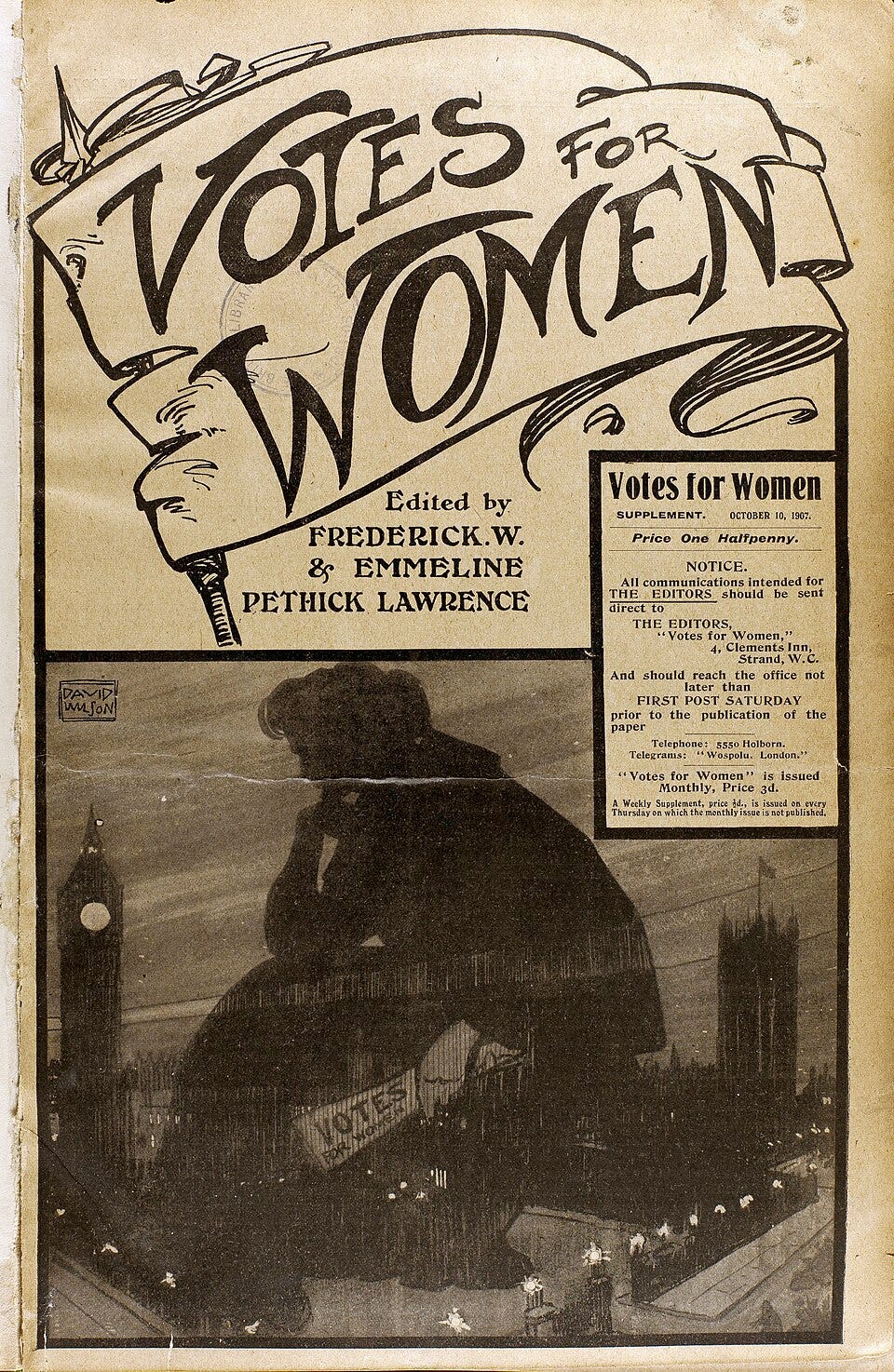
Antonia Moser wrote impassioned letters to Votes for Women, amongst other publications
I know that Antonia was a proponent of women’s suffrage because of impassioned articles she wrote for suffragist publications, and surviving letters from her to other suffragists recorded in the archives, particularly documents at LSE’s Women’s Library.
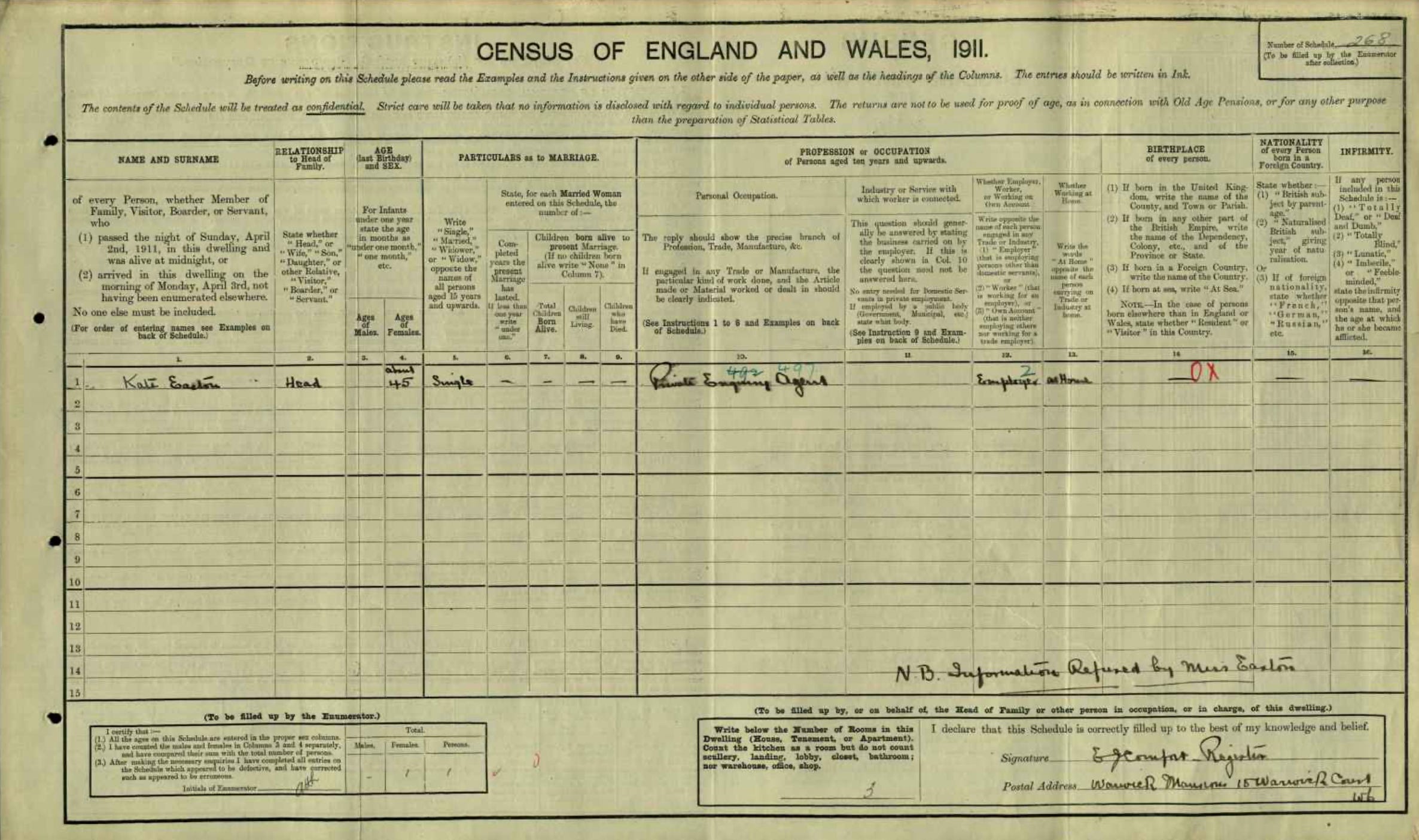
Image from TNA/TheGenealogist
In the case of another female private detective, London-based Kate Easton, the clue is in the 1911 census. In this census, many suffragists refused to provide their information to the census enumerator, arguing that if they were not able to vote, they would not provide their details. As can be seen above, Kate Easton was one of the women who refused to record their details - the census entry reads ‘NB: Information refused by Miss Easton’. The enumerator therefore had to fill in the details to the best of his ability - hence the lack of information about her exact age or place of birth.
Sometimes, information about ‘lady detectives’ can be hard to find; but by looking around in different places, you can learn a bit more about who these women were, and what they believed in.